Episode Transcript
ELIANNA
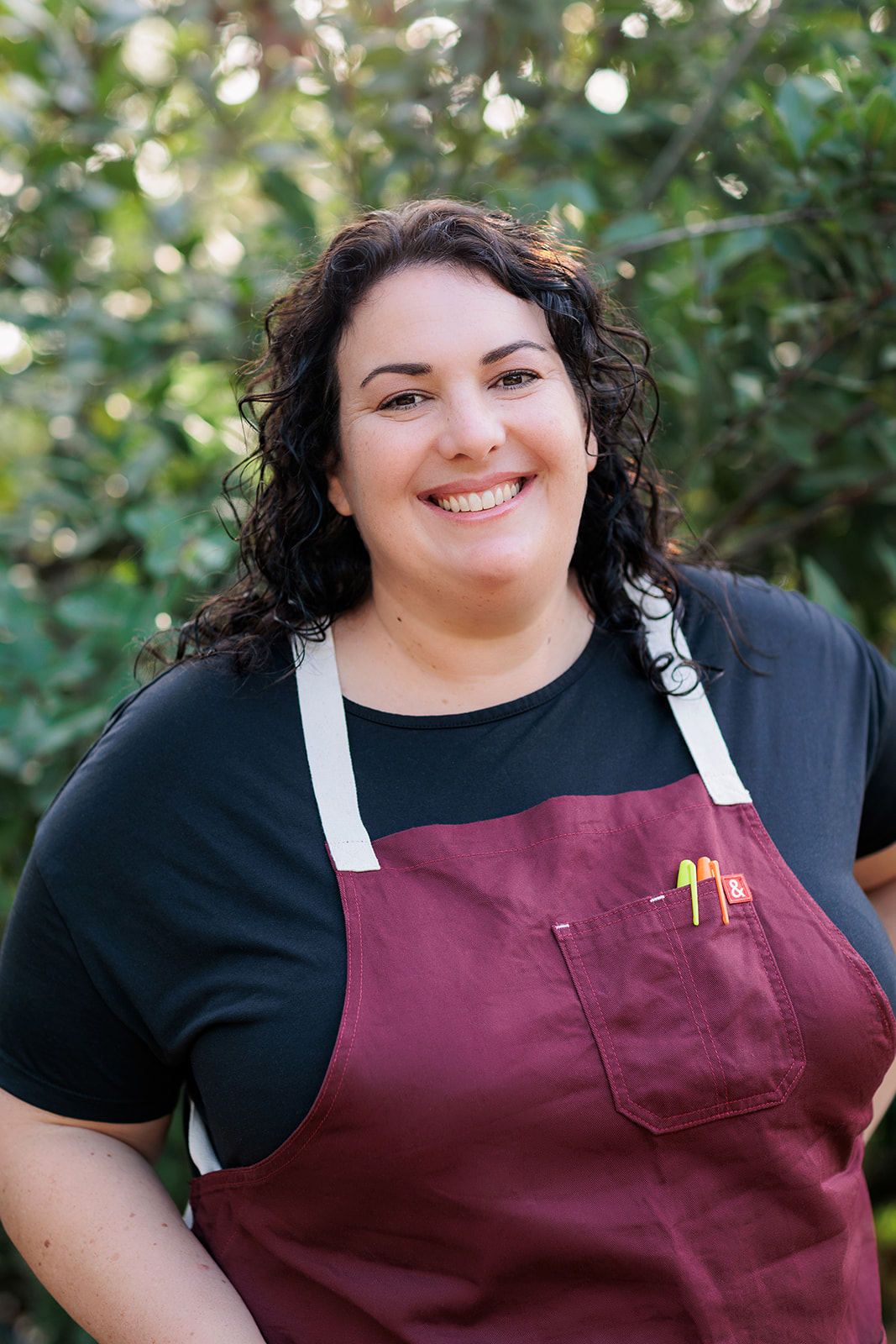
Hi, I'm Elianna and welcome to ADHD FM, a podcast about discovering what it really means to be diagnosed with ADHD as an adult. I was diagnosed in my late 30s and a few years later, I'm still learning, reflecting and laughing my way through it. One thing I realized is that I didn't just want answers. I wanted connection with others who shared my experience. I was searching for my people, for a community that understood how my brain works. I'm still on that journey toda and now we'll explore it together. This is a place to talk honestly about life with ADHD. What's hard, what's easy, what helps, what doesn't, and what we're still figuring out together. I am so glad you're here. This episode is all about AI and ADHD.
I chose it as a theme becaus proofreading has always been quite a challenge for me and really a lifelong struggle. I get really excited and passionate about communicating with others, but when I write it down, it doesn't come out spelled right or has embarrassing grammar errors or has double words. I can see the big picture well and I can build strategy and I can write something thoughtful and compelling. But when it comes to catching small mistakes like typos, sentences that don't quite land, my brain just kind of skips over them. I read the same paragraph a few times and still miss very obvious errors. I just don't see them. And then I feel like this familiar wave of shame, what if I send it with these errors and they don't understand what I'm trying to say because they're small mistakes. I get frustrated. Like, how did I not see that? Why isn't my brain working so fast? Why isn't it able to see these errors?
And for years, I relied on really other people to my partner, my sister, good friends, to double check emails, proposals, applications, really anything, invitations. I've been definitely put the wrong date and wrong time and wrong location on invitations, which is embarrassing when you send it out to a lot of people at once. And while I'm so grateful for all my friends and people that supported me and proofread it, I also felt like an imposition a lot of the times and I felt like I didn't really fully trust myself and I felt like I had to rely on somebody else before I could send something and wait for them to get back to me or if I was under a deadline, I couldn't get them. I had to buffer in enough time to get them to proofread it. Since I started using AI for proofreading, that's really changed. ⁓ Not because it makes me better, but because it gives me a second set of eyes without the embarrassment of having to go ask somebody for help. ask a person for help and then wait for their time to get back to me. So I can pretty instantly get AI to proofread for spelling or proofread for grammar. Trying to keep it in my own voice for sure, but making sure that there are no obvious errors that would make it hard for somebody to understand what I was saying. And then there's no judgment from AI and there's no time wasted. I can just get it out and keep going on with my day. I don't need to think about.
How am I gonna get a proofread? How long will it take? Will I forget about it in the meantime and then forget to send it? It's something that I can use AI to complete the task fully. In this episode, we're talking with an expert that works regularly with ⁓ AI that also has ADHD. And she's gonna share a lot of good tips and just understanding of how we can use it with our ADHD.
How it can be supportive and how it can be used as a tool and hopefully take some of the shame out of asking for help for us.
Before we get into the interview section of this podcast, I want to be upfront about this episode that it contains references to ChatGPT, and it was recorded at a time when we were still using it without fully understanding the concerns surrounding the platform. We've since changed our position, and we encourage you to do your own research and make your own informed decision about which AI platforms you choose to use. A great place to start this is quitchatgpt.org.
I'm very excited to welcome Janelle to the podcast today. Janelle Leatherman Stewart is an event professional based in Los Angeles who specializes in in-person experiences and live stream strategy. For more than 20 years, she has helped organizations bring big ideas to life through thoughtful, designed, large scale events. After being diagnosed with ADHD at age 45, Janelle began exploring new ways to work with her brain instead of against it.
She uses AI as a collaborative tool to support executive function, creative organization, and clearer communication, and is passionate about helping others build systems that feel empowering rather than overwhelming. And a little background, I feel like the last sentence of that is really how we met. ⁓ She is very, she is really passionate about sharing and making sure.
Others are getting the help they need through the tools that she's found. And it's really wonderful. I've learned a lot about AI from her. And it's really wonderful if you get a chance to experience one of her educational livestreams in any way you can find her. It's always great to learn from Janelle and hear what she's doing. she always knows what's happening next, I feel like, too. I always feel like I'm a little bit behind. But it's always great to learn from her. So we're so excited to have you. Thank you for being here today.
JANEL (05:52)
This was my honor and privilege and anytime I get to spend with you is always a treat. So the fact that we get to do it on a podcast or even if we just get to do it as a friend chat, I am so happy to be here.
ELIANNA (06:06)
So tell us a little bit about the beginning for you. Like when you were diagnosed, what really wasn't working for you?
JANEL (06:13)
think it's so interesting when you finally get diagnosed, so much makes more sense in your life. I think the quintessential thing growing up was I have two younger sisters who were always straight A students and everything. I really struggled to get those Bs and Cs, and not because of the work, but just turning it in. And then the line was always, she's just not applying herself, or she's lazy. And obviously,
I raised children, I had full-time jobs, I did all these things. And then by the time I was 45, I was burning out and from over-functioning is now I understand it. And I had one day where I just remember going, I had to go into an office setting. I drove into the parking garage and I couldn't get out of the car. And I was just like, what's happening here?
This was just total shutdown for me. I drove home, like didn't have the radio on. I just was like, I just felt like everything was just a big pile. And I got home and we happened to have a fireplace and it was going. And I just curled up in front of the fireplace, like on the floor. I've never done that, like a cat. Like I just like laid in a fetal position. And I was like, what is going on? I felt like I was just literally melting down. It just like, my thoughts were everywhere. Just felt like I couldn't get anything done or pushed forward. It was paralyzing and I didn't know what that was. And ⁓ I was listening to a podcast about someone talking about ADHD more and women being diagnosed. And I was like, maybe that is me, maybe that is. ⁓ But so much of what I've been told about ADHD up until that point was, it presents this way and it presents that way. And I was like, no, I'm just lazy. It's not that I have ADHD. I just don't push myself enough. I don't stay on track enough. So ⁓ I finally was like, you know what? I'm going to figure this out. And got diagnosed and the next month. And it really did give me such a better lens for how to understand my own brain. And then in turn, how to understand I have two sons. ⁓and ⁓ it's two stepchildren as well. so understanding how some of them are functioning too, whether they have ADHD or don't, like how everyone's brain is and they function and also just not to be so freaking judgmental about like how we produce. yeah, so the diagnosis actually gave me language around it and not just like excuses or shame.
ELIANNA (08:56)
I really like how you mentioned it's you learn about when you get diagnosed, you learn about how your brain works, but also how others work. Because I think for me, I always assumed like my husband, like his brain worked the same. And then when I got diagnosed, I was like, this is why we have some challenges because his brain doesn't work like my brain. It's great. works in a completely different way, but it's different. And acknowledging that has been really helpful for us.
And in friendships too, you know.
JANEL (09:26)
Yes, in relationships, definitely. And I was in a relationship and it started to make more sense as to what some of the dysfunction was and the over-functioning and the different things. So yeah, definitely.
ELIANNA (09:41)
So what was working before was that you were over-functioning basically, but it got to a burnout point.
JANEL (09:47)
Yeah, I think they call that masking. Women tend to do that. Yeah, I had a good career. I got through college. I have children. They survived and grown and everything. So I was able to do all these things. ⁓ But I didn't understand the deficit of which running on that. I had such high anxiety all the time. And I mean, I was on anti-anxiety. I still, you
still am, but to such a lower degree. And I'm still working that out. Seeing like now it makes so much sense. I'm like, no wonder you're worried all the time because your brain is like, it has no outlet. has no, like, it just feels all, so, you know, we're going to talk about it.
ELIANNA (10:33)
I could spit it out and ruminate on ideas forever. ⁓ Okay, so let's bring it to AI. How did you first start using AI? Was there a specific problem you were trying to solve with it?
JANEL (10:45)
I love technology. always have. So I'm always eager to learn new things. And when AI started coming out and I started hearing more about it, I had an acquaintance who was, who's also very into the latest trends of technology. And he started talking to me more about what it was, what AI was becoming and how to do AI prompting. And that was going to be the next big thing, you know? And so I got into prompting and learning how to prompt AI. And I was like, are you kidding me?
This is like, I felt like I had rubbed the lamp and a genie had come out and was like, this is what you've been waiting for.
ELIANNA (11:22)
When you put the right prompt in or why did it feel like that?
JANEL (11:27)
So let's use the bottle metaphor is like, I feel like the bottle is my brain. And I had all these ideas and I was like, my gosh. And I would go to bed at night and be like, ⁓ if I don't write this down, I'll forget it. And I have a severe distrust of my own memory apparently of like, my God, what if this is the best idea ever and I forget it? And then like that anxiety, that's an anxiety I don't need. ⁓
And then, or like I would get so far on an idea and then because I felt so disorganized, it would burn me out and I just would be like, I can't think about this anymore. I'm too tired. What specifically using ChatGPT and prompting led me to do is to really play with it. And I mean, the early iterations, was 2023, I guess, is when I first started really using it. I started using it for things like ⁓ writing emails.
And because that is something, if I have to write an email to somebody about something, feel like it's- Boring. Yeah, my God. No dopamine, all like, just, makes me want to just crawl in a hole. Then I'm self-conscious. I'm like, did I put the right period here? that, you know, like, does this make sense? I have so many ideas. I want it to sound this way. And so I started to put it into chat GPT and like, okay, I want to say this and this is how I want to execute it. And da, da, da.
And it was coming back and I was like, ⁓ my gosh. And then I mean, I wasn't just like copying and pasting it. was like giving me, it was helping me like write better and things. So I was like, this is really cool. Then as it grew and you know, could do better things like images and things like that, I started to use it as my ⁓ brain dump area. Like, I have this wild idea. What if we did da da da da? What would this look like? Or what if I wrote a book about this? what, you know, like creative ideas that I might never actually do.
But it was so fun to get it somewhere and have a little collaboration partner kind of spit back to me about and learn my style as well.
ELIANNA (13:27)
So you discovered it because you were already really involved with tech and somebody else shared about it and you started using it. So there wasn't really a specific problem. It wasn't by accident, you were into it, but there wasn't a specific problem you were trying to solve. But did you notice when you started using it and were able to collaborate with it and all that, did you notice a change in your behaviors?
JANEL (13:53)
Oh, yes. Keep in mind, this is 2023, and so it's very early iteration of it. What I started to notice, it removed that, it reduced my startup friction of like, get something on the page. And so it was starting to become one of those things where I used to like sit down with a paper and pencil and like write out like, oh, this is what I want to say, right? It allowed me to put it out there and get something further along than just my doodles, basically. Um, so I had a lot more momentum, less paralysis, especially at work. I had a lot more confidence in what I was sharing.
ELIANNA (14:31)
I find that too. find it's very, I use it a lot for not writing the emails, but proofreading them. So it's really keeps the momentum going. Cause in the past, even like applications or presentations, I felt like I always had to send it to somebody, wait for their feedback, you know, back and forth. But with ChatGPT, can just get pretty immediate feedback. And then I feel like I can keep that momentum going and complete the project, you know, not forget about all my thoughts. You know, can get them all in them have them edit it, have like a more complete process.
JANEL (15:03)
And I think the other part is that what it helped me do is a lot of times if a form or application or something is like, know, tell me a little bit about this or resumes and things like that. With ADHD, people can tend to over explain or feel like you have to constantly say more as I'm doing now. ⁓ What it helped me do is like, what is this person really asking from me? And how can I say it concisely? That was the other part, that it really helped me cut down word salad.
ELIANNA (15:38)
Yeah, yeah. And is that the prompt to use? Like, can you help me say this more concisely?
JANEL (15:44)
Absolutely. You know, what are they really wanting to know from me in this question? Because sometimes, you know, you're reading something and you're like, did I, I don't really understand what they want from me here. And, ⁓ and I really find that it helps me like better understand it and then give my voice to that.
ELIANNA (16:01)
So where do you think AI and chat GPT help the most? Is it like, we mentioned a few things like task breakdown, editing, eliminating the friction of having somebody to collaborate, giving you a place to put it so that you don't forget it, like a place you can trust. Anything else like prioritizing?
JANEL (16:22)
I would say there's two areas. One is the brain dump and prioritization of a brain dump. Like, I have all these tasks and I have two hours. What should I do? You know, kind of helping me that way. The other area it's really helping ⁓ me is in meetings with listening and really listening not to respond, but to understand. I really struggle with that because I was constantly like, I don't want to forget to say this, or interrupting people in a meeting, or when someone's trying to talk to you and you're like, but I have this idea. It's like, now that with these tools, either Zoom has a recording or what I was doing early on is I would ask to record a meeting and I'd grab the transcript and I would run that through and be like, was my name mentioned? What were the action items? What are some areas I can respond to? So it gave me time to like. really be present in the meeting and then take it afterwards and go through and go, okay, there's my action items. Here's how I'm going to respond. And I think interpersonally, I'm not interrupting people. I'm coming back with very well thought out responses. ⁓ I still am participating in the meeting. I'm not just totally quiet waiting for the transcript, but I think my anxiety about being able to respond in the moment, it really helps with that.
ELIANNA (17:44)
That's awesome. It probably helps too with, yeah, like the emotional regulation if you don't have to worry about, am I gonna miss this or am I gonna interrupt somebody and offend them or is it gonna be like, I definitely do this same thing. I've been told I interrupt people and it like, don't mean it in any kind of an offensive way. It's just because I'm like, I have to share this now and I feel like building up and building up and building up.
JANEL (18:08)
I do a thing now and because most of my meetings are on Zoom and things like that. a technique, this is not AI technique, for myself, a visual cue I use for myself when I know I wanna say something in a meeting is I cross my fingers like as a promise, like just as a visual cue for myself. And also now my team members know, Janelle's gonna probably say something..
JANEL (18:36)
I do it for myself. do it for them too of like, I don't want to interrupt you, but I definitely have, I have a thought here. I want them to finish their thought. And, and I always have paper and pencil next to me too, in case like you just, like, I don't want to forget that or whatever.
ELIANNA (18:51)
No, I'll try that because I write things down a lot. Like I need something for my hands or something to do. So that would be good. Can you walk us through one like real life example of how you would use AI to help with prioritizing?
JANEL (19:06)
Sure, it all starts with a prompt. I think it's also a framing of how you approach AI. I think one of the biggest gifts I was given in learning about AI prompting was to really think of it as your smartest intern. This intern is smart, but they don't know everything. They don't, you know, they can give you something back, but it's not polished necessarily. So you're not gonna just let your intern turn in the work to your boss, right? It's gonna... pass through you first. So I think formulating a really strong prompt, and I talk to Chachi PT a lot. So for an example, ⁓ I might say something like, ⁓ I'm overwhelmed. Here's everything in my head. Help me prioritize based on the urgency with this deadline. Or I say, because I tend to over explain, simplify this so it's clear and direct. ⁓but I also usually add in there, but I don't want it to sound like AI. So no dashes and you know, and I want it to sound like me. And that is the other part of it is it, you are training your intern to have your similar voice. so that when it comes back, it still sounds like this is, if you always say hi instead of hello, or I always say, I always close all my emails with all my best. That's how I sign off. So It knows that now, so it doesn't say like best wishes or cordially. It says all my best.
ELIANNA (20:37)
What are common mistakes people make when starting with and using AI?
JANEL (20:42)
I think, well, the number one I see is people think, and I'm going to speak specifically, even though I use Gemini and other ⁓ AI tools, I primarily use ChatDBT. I think one of the first mistakes is people think it's Google. So they try to use it like a Google, like, tell me the five best restaurants in San Antonio. That's not really what it's designed.might want to ask is, know, like, want to have a community type dinner with family style. What type of cuisine would be best for that? Like, so it might say, well, Italian, because you can do big pasta dishes or something like that. So that's one is don't use it like it's a Google. Like, where is, how do I get to, you know, Fourth Street? Because that's not how it's designed.
ELIANNA (21:25)
It can do more complex and layered questions.
JANEL (21:28)
Exactly. Being too vague in what you're asking. ⁓ Like, what color should my wall be? Well, you know, it'll come up with something, that's, you know, it's like, well, where is this wall? you know, ⁓ expecting magic. ⁓ Letting it replace your personal.
ELIANNA (21:48)
How do I make a million dollars?
JANEL (21:50)
How do I make a million dollars? It's like, well, what are you willing to do? Not fact checking. So when accuracy matters. So you have to really think of AI as a scaffolding and not, don't use it as autopilot. I think that's really important. I think one of the best things you can always end a prompt with is, what questions do you have for me? Because that helps you build this conversation. So if you're just spitting orders at it and then it's coming back to you you're like,
That's not what I want. It's iterative. You have to constantly be like, you're almost there. Like ⁓ I sometimes use it for mock-ups of designs of a product or something you might want for swag or something. And I'll be like, you're almost there, but could you make it yellow instead of green? And and please never use AI photos as a final photo. I have the pleasure of working with amazing designers.graphic artists and things like that. And I would never use an AI over them because their skills are and what they bring and the authenticity. But I can use AI to kind of get from my brain to them like, I want something like this. And then watching what they create is, yeah, infinitely better.
ELIANNA (23:11)
Use it as a communication tool.
JANEL (23:14)
Yeah, absolutely, not as a finished product.
ELIANNA (23:17)
Maybe that leans into this question too, but how do you keep it from becoming a crutch?
JANEL (23:22)
I think mainly because I know it's a tool and it's not me. And I like having my own edge and my own authenticity. I'm very into creative collaboration. So it doesn't have to all be me, but I want some of myself in it. And I want to be able to stand by my work as well. Anywhere I don't feel confident in my knowledge base, which is a lot of places, going to the mechanic, going to the dentist, going to like...
I want to have my talking points before I get there, even before I see my therapist or these are all the things that I've been thinking about this week. Can you help me organize? I want to make the most of this 50 minutes that I'm paying for.
ELIANNA (24:03)
Okay, we have a listener question. I'm just gonna read it to you She says I'm worried that too much support might hinder my already under stimulated ADHD brain How do I balance using AI without letting it do everything for me?
JANEL (24:20)
Well, it can't do everything for you, so that's the first thing. So like I said, it's not magic. You still have to put things in it. You know, this is a great question. Here we are with our ADHD worry. know, it's like, I'm worried about being understimulated. Again, I think you have to really understand what does stimulate you, too. Like, if creating content is your thing, but you hate writing the captions, it's like, find the thing that has your lowest point. And use AI for that part. But again, I think it has to be tied into something you're passionate about too, that you're putting your mark on. I mean, I would love for ChatGPT or one of those to like stand in the line at the DMV for me, but it's again, not gonna do that. What it might do for me though, is help me get there by like being my buddy while I'm standing in line and being like, I have this idea for a podcast about people at the DMV, you know, and just being a thought partner and using it that way. ⁓ It should be a consultant. And it should not replace your learning and it should never be used to avoid heart conversations. So if, and maybe that's what the listener was saying, like, I don't like responding to my mother-in-law, so I'm just gonna always put it in chat to meet you and have that sent back. I mean, especially if you don't read over this stuff and you send it as is, you might be agreeing to something you didn't know you were agreeing to.
ELIANNA (25:45)
So that's AI doing something for you. That's what they were worried about.
JANEL (25:50)
Yes, like doing something to where I'm like, I'm just going to let AI do that. I'm not going to look at it. ⁓ Yeah, that's where I think too much support. I'd say you have to tie it to something that you're passionate about. And just remember, it cannot be your decision maker. can't be having hard conversations without you in the loop. yeah, think of it as that smart intern. Would you send them to
Go have all of your conversations. Do all of your things for you. With your mother.
ELIANNA (26:20)
In law? I should say for the record because my mother-in-law does listen to this. have not used... sent her any messages. So what should people know about privacy and sensitive information and using AI?
JANEL (26:26)
You see it too.
Yeah, so obviously don't input. This is an intern, right? So you trust them to a point, but it's still, you know, it's A, know if you're using this for work, know what your workplace policies are. ⁓ At my workplace, I can use, I'm allowed to use Gemini. So that's what I use for work and I use ChatGBT for my personal. I also, I don't input confidential information.
so if I do like, I take out my personal information and I'm like, if somebody received this letter, hypothetically, ⁓ and always fact check, ⁓ important information before you send it is definitely that I would say the privacy part. ⁓ and then
ELIANNA (27:30)
There any settings? Like, can we just start using it? Or are there any settings you should look out for?
JANEL (27:36)
you know, I, I would caution on, and this is a really hard thing for people with ADHD, I know. it's the fine print that we have to look at. so I will say, I, I tend to with contracts that have fine print, I will copy and paste the fine print and say, you know, explain this to me like I'm 12, you know, and put it in bullet points so that I really understand what are the things I should avoid.
So I know you're asking the thing to tell you what it should not. So I know that's some weird.
ELIANNA (28:11)
Ask Chat GPTi what settings. Maybe in Gemini ask what settings to protect your privacy.
JANEL (28:17)
I mean as much as you can educate yourself about it. If you feel uncomfortable don't put it in there. That would be my main thing. I don't know of any settings ⁓ you can You can feed in like I want this voice of me and these brand colors or things like that You can give it those types of things. There's definitely different tools ⁓ to use but yeah, I would just read through and to your comfort level and just know I mean
You know, just like anything, that there's really no free, if something's free, you are paying, you're giving your data, you're giving them information about yourself.
ELIANNA (28:55)
What are the ethical or environmental concerns we should be thinking about when using AI.
JANEL (29:01)
Absolutely. So as far as ethics, you always want to credit human creativity. ⁓ But I also, like I mentioned, if I'm doing concepting pieces in AI, I also make sure people understand I'm using AI for that. ⁓ You have to be aware of its bias. It's getting better and better, but you definitely have to be aware that it only knows what it knows right now. And ⁓ even though it learns much faster than we are capable of, ⁓ it still will have its bias. And so you have to be aware of that. So when you're asking it to produce something or give you a concept, it's going to have biases. And ⁓ you have to train that out. As far as environmental costs, this is a tricky one because, yes, there is an environmental cost to everything we're doing, right?
I did see recently, I think Anthropic is working on offsetting costs for data centers. mean, obviously my hope is that AI solves the issue it's created as far as the data centers. be great. Yeah, I was like, have faith in that, of course. You've got to follow the money. You've got to follow the money and who's benefiting from it and then how do they benefit from it.
I would say, you know, I know there's the whole like, every time you ask it a question, it's an equivalent of a bottle of water. And I'm like, I don't know if that's completely accurate. So I mean, I would caution anyone reading news stories just to kind of really think through. Not all of us drive electric cars, but even electric cars have an environmental impact. know, everything has an environmental impact. So I don't want to minimalize it. ⁓ But I also know that as we've talked about the genie is out of the bottle, Pandora's box is open, this exists, it's not going away. So we have to learn how to harness it. And I really, this is why I'm passionate about people learning about AI in all the ways, because I'd rather the good people understand how to use it, how to train it, because I'd much rather the good people, the people with good intention are the ones training and utilizing it so that we don't have harder environmental costs to it, if that makes sense.
ELIANNA (31:18)
What does responsible AI use look like?
JANEL (31:21)
I think in a work setting or I think this is where my friends who are in the creative arts, ⁓ I tend to hear more fear from them is that, you know, ⁓ it's gonna take our jobs, nobody's gonna want art from us or whatever. And I'm like, I can understand that fear, but I kind of liken it to ⁓ fast food versus fine cuisine. There's always gonna be the need for something fast and cheap. that the robot can make and that we need, you can serve beef in many ways, Hamburger to the finest filet, right? So that's how I look at art as well.
I think we as humans will always crave the artisan of things too and that connection and I think we're wired that way. Will everybody? No. that's where I think we need to like, we understand how to utilize it as a tool. And then we also understand our important connection to each other through conversation, through creativity, through collaboration, through appreciation of arts and skills.
ELIANNA (32:37)
Definitely. Okay, let's talk about the future of AI now. What's one unexpected way that AI can support Or do we cover all of them?
JANEL (32:49)
I myself am always learning and so while I can speak to my understanding of AI and I do use it a lot, I would not say I know everything about it obviously, but some things I could see. I think where we're going to see this empowering neurodivergent professionals and helping them better communicate with colleagues. ADHD specific prompt libraries, which they probably already exist and so I would highly recommend if you're not
if you don't understand how to prompt, know, take a lesson. There's lots of free lessons out there, LinkedIn learning, different places, Skillshare, different things, ⁓ to teach you how to prompt and then maybe find those prompt libraries. ⁓ And maybe even getting into like future future. Could they plant a chip that helps us with executive function co-piloting?
ELIANNA (33:45)
Ooh. Could it help me to rotate my laundry? What do you see as the future of AI for ADHD communities?
JANEL (33:50)
Yeah, exactly.Hopefully, it brings us closer together and helps us with more intentional collaboration. I can't speak for everyone's form of ADHD in different communities. Some people, it tends to make them want to be more solo processors. Some of us want to community process. Maybe it ties that bridge and helps people feel more confident in collaborating with others, especially if collaboration tends to be ⁓ a trigger for rejection sensitivity.
ELIANNA (34:26)
We're going to get into rapid fire questions soon, before that, is there anything else you want to share about anything we've talked about or anything about yourself or things you're excited about?
JANEL (34:39)
I'm very happy to be ⁓ in a place in my career where I am encouraged to use AI as a tool. so, I mean, in fact, it's like encouraged because it's a way to also prevent burnout. And when you have a company you work for and bosses you work for that use it respectfully, not to replace you, but to help you, and especially in burnout, because we are being asked to do more with less in a lot of places.
So this could be a tool to help us with that and alleviate that.
ELIANNA (35:11)
Do you think that's because you're at a tech company or do you think, like if somebody has ADHD and wants to use it at work but it's not allowed or approved, ⁓ what would you say to them?
JANEL (35:29)
I would say have that conversation if you can. mean, presenting it as this is a tool, I'm not using it to replace myself. And if you're lucky enough to work at a place that has a really good HR with, you know, DI and they really understand working with people with atypical styles of work and learning and they value that, God bless. I hope there's more of them out there. And if you're one of those people who doesn't understand it, understand it and try to be that workplace for other people.
ELIANNA (36:01)
That's,if you're a manager.
JANEL (36:04)
If you're a manager.
ELIANNA (36:06)
Yeah. All right. Amazing. Okay. So here we go with rapid fire. What is your favorite thing about having ADHD?
JANEL (36:16)
My ability to ideate quickly.
ELIANNA (36:19)
That's my favorite thing about your ADHD. What's one small thing that makes your ADHD brain light up with joy?
JANEL (36:29)
When someone says to me, I have this crazy idea.
ELIANNA (36:35)
Because you know, you know you can help them.
JANEL (36:37)
Well, I want to know about it and I want to, know, I'm passionate about other people's passion, but I also want to be like, do you want my help with that? I love chaos to some degree.
ELIANNA (36:48)
What is the most random thought you've had recently? ⁓ see if it's appropriate for the air.
JANEL (36:57)
So random. It was actually a dream and then it really kept me thinking. ⁓ I guess I was babysitting a new baby and it was a shapeshifter baby and while I was watching the baby it saw like a butterfly and it became a butterfly and I was like, that's cool. And then it flew away and I couldn't get the baby back. Cause I was like, there's all these butterflies. So like my most random thought was like, my God, what if I had a shapeshifter baby? then they just...
That's pretty random. And then it flew away. And it flew away. But it's a baby, so you can't be like, hey, come back. And now you've got a butterfly with a baby brain. I mean, what's that? It's pretty random.
ELIANNA (37:40)
What's a helpful understanding about how your brain works that you're excited to share with others?
JANEL (37:46)
don't like to usually lead with a negative, but I would say don't be ashamed of it. Like lean into your strengths, understand your weaknesses as growth potentials ⁓ or as this is my favorite, a fog, another fucking opportunity for growth. So yeah, think that's, once I-
ELIANNA (38:11)
Acceptance if you want to say it positively right accepting
JANEL (38:14)
acceptance of just like, hey, my brain works differently in a lot of good ways. And there's other ways that it could improve or it's just not meant to work that way and I have to accept it and work with it. Work with it.
ELIANNA (38:33)
And then finally, what is your most useful ADHD hack? ⁓
JANEL (38:37)
Probably when things feel so big and overwhelming. What's the smallest step I could take? What's the smallest step I could take right now?
ELIANNA (38:50)
Makes it a lot easier to start when you frame it that way. Thank you. This is amazing. Thank you.
ELIANNA (39:05)
Thank you for listening to ADHD FM. Huge thank you to my producer and editor, Marion Cunningham. If something from today's episode resonated with you, I invite you to share it with a friend or leave a quick review. I'd also love to hear from you. So drop me a voice note or DM with your questions and tell me about your experiences or really whatever else you want to share. You can reach me on Instagram or TikTok at ADHD FM. Until next time, take care of yourself, give your brain a little grace and keep finding what works for you. Bye.